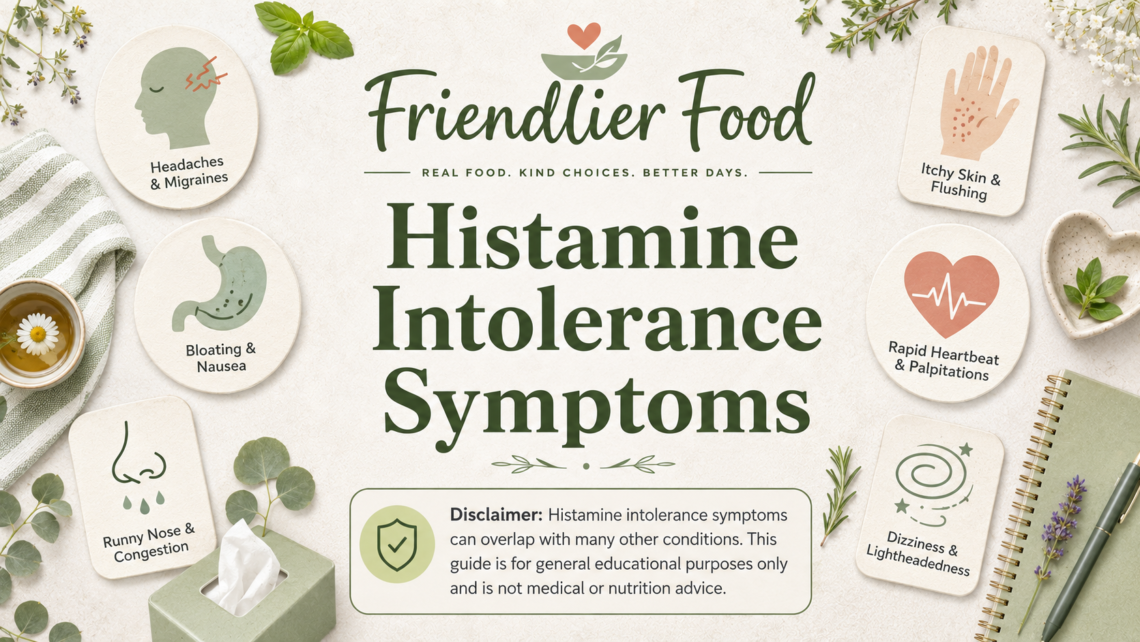
Histamine intolerance is associated with a wide range of possible symptoms, which can make it difficult to recognise.
Symptoms may involve the digestive system, skin, nose and airways, nervous system and cardiovascular system. However, these symptoms are not specific to histamine intolerance and can occur with many other conditions. There is also currently no single validated test that can reliably diagnose histamine intolerance on its own. (PubMed Central (PMC))
Commonly Reported Symptoms
Symptoms attributed to histamine intolerance can include:
Digestive symptoms
- bloating
- abdominal discomfort or cramping
- diarrhoea
- nausea
- vomiting
- digestive upset
Gastrointestinal symptoms are commonly reported in people suspected of having histamine intolerance. (PubMed Central (PMC))
Headache and Migraine
Some people report:
- headaches
- migraine
- pressure or throbbing headaches
Headache is one of the more frequently described symptoms associated with histamine intolerance. (PubMed Central (PMC))
Skin Symptoms
Possible skin symptoms include:
- flushing
- itching
- hives
- redness
- rash
- swelling
These can resemble an allergic reaction, which is one reason histamine intolerance can be difficult to distinguish from other conditions. (Cleveland Clinic)
Nose and Respiratory Symptoms
Some people experience:
- runny nose
- blocked or congested nose
- sneezing
- watery eyes
- difficulty breathing or shortness of breath
Again, these symptoms can have many causes, including allergies, asthma and respiratory conditions. (Cleveland Clinic)
Heart and Circulation Symptoms
Reported symptoms can include:
- rapid heartbeat
- palpitations
- changes in blood pressure
- dizziness or light-headedness
- flushing
Histamine can affect blood vessels and cardiovascular function, but these symptoms should not automatically be attributed to food or histamine. (PubMed Central (PMC))
Other Symptoms People Sometimes Report
The symptom picture can be broad. Other reported symptoms include:
- fatigue
- feeling generally unwell after particular foods
- menstrual symptoms
- swelling around the eyes, lips or face
- itching without an obvious rash
Research looking at people diagnosed or suspected of having histamine intolerance has found that symptoms frequently occur across several body systems at the same time, rather than as one isolated symptom. (PubMed Central (PMC))
Symptoms Can Vary From Day to Day
One confusing feature is that the same food may not necessarily produce the same response every time.
Possible influences include:
- how much histamine-containing food has been eaten
- the freshness and storage of food
- alcohol
- medications
- gastrointestinal health
- other illnesses or health conditions
- individual ability to metabolise histamine
This helps explain why histamine intolerance is sometimes described in terms of a person’s overall histamine load or tolerance, although there is no precise clinical “histamine bucket” that can be measured in everyday practice. (PubMed Central (PMC))
How Soon Do Symptoms Occur?
Symptoms associated with dietary histamine can occur after eating, but timing and severity vary considerably between people.
A reaction that consistently follows a particular food may be useful information, but one reaction does not prove histamine intolerance.
Keeping a simple food-and-symptom record can sometimes help identify patterns to discuss with a doctor or dietitian.
Is Histamine Intolerance an Allergy?
Not exactly.
A conventional food allergy involves an immune reaction to a specific food protein.
Histamine intolerance is generally proposed to occur when the amount of histamine entering or being produced in the body exceeds the body’s capacity to metabolise it, including through the enzyme diamine oxidase (DAO) in the gut. However, the mechanisms and diagnostic criteria remain an active area of research. (PubMed Central (PMC))
This means someone can experience symptoms that look allergy-like without necessarily having an allergy to that particular food.
Histamine Intolerance Can Look Like Other Conditions
This is important.
Symptoms attributed to histamine intolerance overlap with many other conditions, including:
- food allergy
- food intolerance
- migraine
- irritable bowel syndrome
- coeliac disease
- inflammatory gastrointestinal disease
- allergic rhinitis
- asthma
- medication reactions
- mast-cell disorders
For this reason, Cleveland Clinic notes that suspected histamine intolerance is generally considered only after other possible explanations for symptoms have been assessed. (Cleveland Clinic)
Histamine Intolerance and MCAS Are Not the Same Thing
Histamine intolerance and mast cell activation syndrome (MCAS) are different concepts.
Histamine intolerance primarily relates to difficulty tolerating histamine, particularly dietary histamine.
MCAS involves inappropriate activation of mast cells and the release of many different chemical mediators, of which histamine is only one.
Because symptoms can overlap, it is worth avoiding the assumption that reacting to high-histamine foods automatically means someone has MCAS.
When Food Seems to Be Involved
If you notice symptoms repeatedly after foods such as:
- fermented foods
- aged cheeses
- cured meats
- wine or other fermented alcohol
- preserved or poorly stored fish
- other high-histamine foods
it may be useful to discuss the pattern with a health professional.
A carefully supervised short-term reduction followed by reintroduction can sometimes help determine whether dietary histamine is actually relevant. Current reviews emphasise that diet and reintroduction remain important parts of assessment because there is no definitive diagnostic biomarker. (MDPI)
When to Seek Medical Help
Do not assume serious symptoms are simply histamine intolerance.
Seek urgent medical attention for symptoms such as:
- difficulty breathing
- swelling of the tongue or throat
- collapse or fainting
- severe wheezing
- rapidly worsening widespread hives with other symptoms
These can occur with anaphylaxis or another serious medical problem and require urgent assessment.
A Simple Way to Think About It
Possible histamine-related symptoms tend to cluster around:
GUT → SKIN → HEAD → NOSE/AIRWAYS → HEART/CIRCULATION
But symptoms alone cannot tell you whether histamine is the cause.
The more useful question is often:
Do symptoms repeatedly occur in a recognisable pattern, and do they improve when the suspected trigger is removed and return when it is carefully reintroduced?
That pattern should ideally be considered alongside medical assessment rather than relying on a long internet symptom checklist.
The Friendlier Food Approach
Food can be one piece of the picture without needing to become the explanation for every symptom.
If you suspect histamine intolerance:
- look for repeated patterns rather than isolated reactions
- avoid unnecessarily removing large numbers of foods
- consider other possible causes of symptoms
- use dietary restriction for the shortest practical period
- reintroduce foods where appropriate
- seek medical or dietetic advice if symptoms are significant or your diet is becoming restricted
The aim is to identify foods that genuinely matter while keeping eating as varied, nourishing and manageable as possible.
Friendlier Food provides recipes and general educational information. It is not a substitute for personalised medical or nutrition advice.