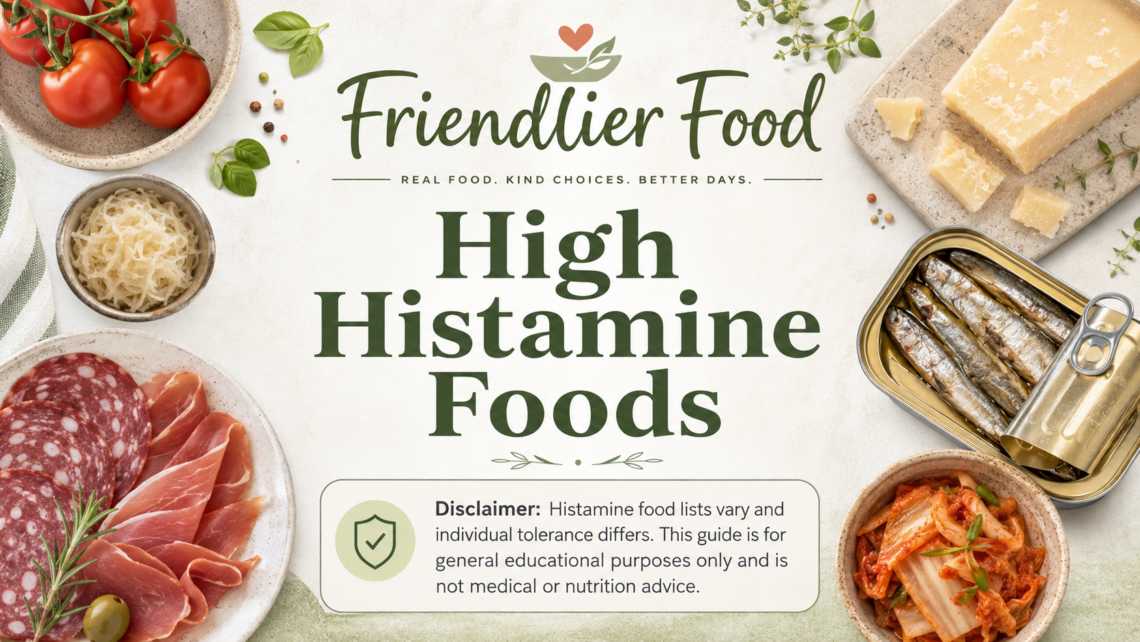
High Histamine Foods
If you are following a low histamine diet, one of the first questions is often:
Which foods are high in histamine?
Histamine occurs naturally in the body and can also be present in food. The amount in food varies considerably depending on how the food is produced, fermented, aged, processed and stored. Fermented, aged and cured foods are among the most consistently recognised sources of dietary histamine. (PubMed Central (PMC))
There is no single universally accepted low-histamine food list, so you may notice differences between websites and diet guides. Individual tolerance can also vary. (Cleveland Clinic)
Foods Commonly High in Histamine
Fermented foods
Fermentation allows microorganisms to produce histamine and other biogenic amines.
Common examples include:
- sauerkraut and other fermented vegetables
- kimchi
- soy sauce and other fermented soy products
- miso
- kombucha
- fermented pickles
- some vinegars
- fermented sauces and pastes
Fermented foods are among the more consistently identified high-histamine food groups. (PubMed Central (PMC))
Aged and Mature Cheeses
Histamine can increase as cheese is fermented and matured.
Foods that may contain substantial amounts include:
- Parmesan
- cheddar
- Swiss-style cheeses
- blue cheese
- aged Gouda
- other mature or long-aged cheeses
Fresh, non-aged dairy products may contain considerably less histamine, although tolerance still varies between individuals. (PubMed Central (PMC))
Cured, Smoked and Processed Meats
Examples include:
- salami
- pepperoni
- prosciutto
- cured ham
- smoked meats
- dried meats
- fermented sausages
Freshness matters with meat. Histamine is produced through bacterial activity, so freshly prepared meat is generally a different proposition from meat that has been fermented, cured, aged or stored for extended periods. (PubMed Central (PMC))
Fish and Seafood
Fish is one of the foods where histamine levels can become particularly high if it is not kept sufficiently cold after being caught.
Potentially higher-histamine choices include:
- canned fish
- smoked fish
- dried fish
- pickled fish
- preserved fish
- tuna
- mackerel
- sardines
- anchovies
The histamine content of fish depends heavily on its freshness and handling, rather than simply the species itself. (PubMed Central (PMC))
Alcohol
Alcoholic drinks frequently appearing on high-histamine lists include:
- red wine
- sparkling wine
- beer
- champagne
- fermented alcoholic drinks
Alcohol may be relevant for more than one reason: some alcoholic drinks contain histamine, while alcohol can also interfere with the body’s handling of histamine. (PubMed Central (PMC))
Vegetables Often Listed as Higher Histamine
Some commonly restricted vegetables include:
- tomatoes
- spinach
- eggplant
- avocado
- fermented vegetables
However, this is where histamine lists start becoming less straightforward. Different low-histamine diets disagree substantially about which plant foods need to be restricted. (PubMed Central (PMC))
Rather than assuming that every food on a long exclusion list must be avoided indefinitely, individual tolerance can be useful to consider.
What About Chocolate, Bananas, Citrus and Strawberries?
You may see foods such as:
- chocolate
- bananas
- citrus fruits
- strawberries
- pineapple
- nuts
- egg white
described online as “histamine liberators” or foods that trigger histamine release.
This category should be interpreted cautiously.
There is considerably less agreement about histamine-liberating foods than there is about genuinely histamine-rich fermented or aged foods. Reviews of low-histamine diets have found substantial inconsistency between food exclusion lists. (PubMed Central (PMC))
Someone may certainly notice symptoms after eating one of these foods, but that does not necessarily mean the food itself contains a large amount of histamine.
Freshness Matters
When it comes to histamine, how food is handled can sometimes matter almost as much as what the food is.
Histamine can be produced when bacteria act on the amino acid histidine in food. Once histamine has formed, normal cooking does not reliably remove it. (PubMed Central (PMC))
A lower-histamine approach therefore often emphasises:
- choosing fresh foods
- refrigerating perishable foods promptly
- avoiding foods that have been stored for long periods
- freezing portions when appropriate rather than keeping them as leftovers for several days
- being particularly careful with the freshness of fish and meat
Cleveland Clinic summarises the general principle simply as fresh is best. (Cleveland Clinic)
A Simple Way to Remember It
If you are feeling overwhelmed by long food lists, start with the foods most consistently associated with higher histamine:
FERMENTED → AGED → CURED → SMOKED → PRESERVED → LONG-STORED
These are generally more useful places to start than attempting to remove every fruit, vegetable or ingredient that appears on an internet histamine list.
Do You Need to Avoid All High-Histamine Foods?
Not necessarily.
Histamine tolerance varies considerably from person to person, and symptoms may depend on the amount eaten, combination of foods, freshness and your individual tolerance at the time.
The aim of nutrition therapy is generally not to create the longest possible exclusion list. It is to reduce symptoms while maintaining a nutritious, varied diet and good quality of life. Overly restrictive advice can be unnecessary. (PubMed Central (PMC))
A short period of dietary modification followed by careful reintroduction may help identify which foods actually matter for an individual. Cleveland Clinic similarly recommends adding suspected foods back one at a time rather than unnecessarily avoiding everything indefinitely. (Cleveland Clinic)
High Histamine Foods at a Glance
More consistently high in histamine
- fermented foods
- aged cheeses
- cured and fermented meats
- smoked and dried meats
- canned, smoked and preserved fish
- some alcoholic drinks, particularly fermented drinks
- long-stored or poorly handled protein foods
Foods commonly restricted but where lists vary
- tomatoes
- spinach
- eggplant
- avocado
- bananas
- citrus
- strawberries
- chocolate
- nuts
- egg white
These second-group foods are better considered according to individual tolerance rather than automatically being treated as equivalent to aged cheese, salami or fermented foods.
The Friendlier Food Approach
A low-histamine diet does not have to mean becoming frightened of food.
A more practical approach is to:
start with the bigger sources of histamine, choose fresh food where possible, notice your own tolerance, and avoid unnecessary restriction.
If symptoms are significant or your diet is becoming very limited, speak with your doctor or an Accredited Practising Dietitian, particularly before making major or prolonged dietary changes.
Friendlier Food provides recipes and general educational information. It is not a substitute for personalised medical or nutrition advice.