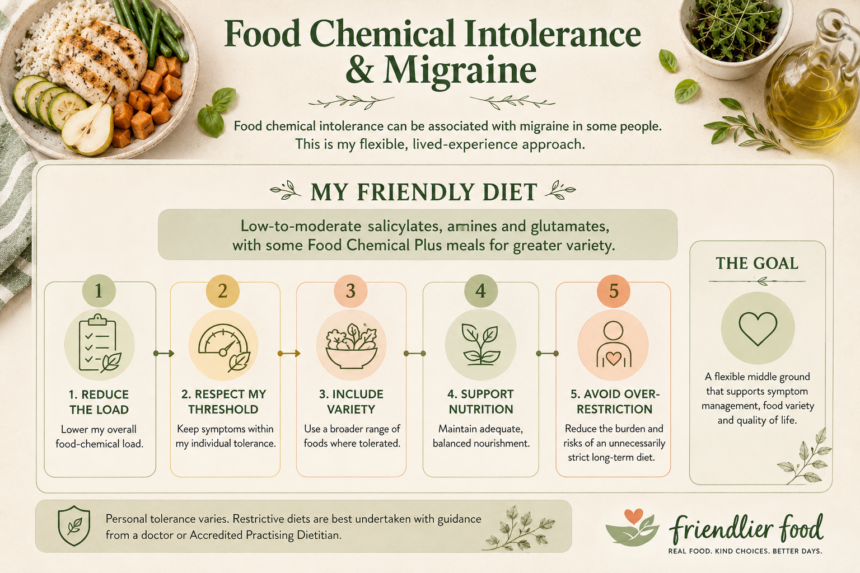
Food Chemical Intolerance and Migraine
Food chemical intolerance can be associated with migraine in some people. I am one of the people who experiences this association. Healthdirect Australia
I have found it helpful to follow what I call a friendly diet. This generally provides low-to-moderate amounts of salicylates, amines and glutamates. I also include some Food Chemical Plus meals, which contain a broader—but still moderated—range of these food chemicals.
This flexible approach aims to:
- reduce my overall food-chemical load
- keep symptoms within my individual tolerance threshold
- maintain greater food variety
- support adequate nutrition
- avoid the risks and burden of an unnecessarily strict long-term elimination diet
Why I share my recipes
I share my recipes to provide practical meal ideas for people who may also be trying to manage food-related symptoms without making their diet more restrictive than necessary.
The recipes reflect what has worked for me. They offer a flexible range of options—from gentler meals to Food Chemical Plus meals containing a somewhat broader range of ingredients. This allows people to choose and adapt recipes according to their own needs, tolerances, health conditions and dietary guidance.
These recipes are not intended to diagnose food intolerance or prescribe a particular diet. A recipe that suits me may not suit someone else, and individual ingredients can be substituted where appropriate.
I have also noticed benefits for some of my other symptoms and conditions. This is my personal experience and does not mean that food intolerance is necessarily responsible for similar symptoms in everyone.
Healthdirect Australia advises that food chemical intolerance may be associated with symptoms such as migraine, dizziness, skin reactions, nasal or respiratory symptoms and a fast heartbeat.
Tolerance is individual and may change with a person’s overall health and combined trigger load. People considering substantial dietary restriction should ideally seek guidance from a suitably qualified dietitian. This can help suspected triggers to be assessed while protecting nutrition, food variety and quality of life.