About Friendlier Food
Friendlier Food provides recipes and practical meal ideas for people interested in food-intolerance-aware eating. The information is for general educational and meal-planning purposes only and is not a substitute for personalised medical or nutrition advice. If you are making significant dietary changes or managing health symptoms, please discuss them with your doctor or accredited practising dietitian.
Friendlier Food grew partly from lived experience of using the RPAH Allergy Unit food chemical intolerance diet as one part of managing migraine and some other symptoms associated with nervous-system and sensory sensitivity.
Migraine can also involve neurogenic inflammation, where sensory nerves contribute to inflammatory signalling and pain.
The diet was undertaken following recommendations from health professionals and was used as one part of a broader approach to symptom management.
Low Amine and Salicylate Aware
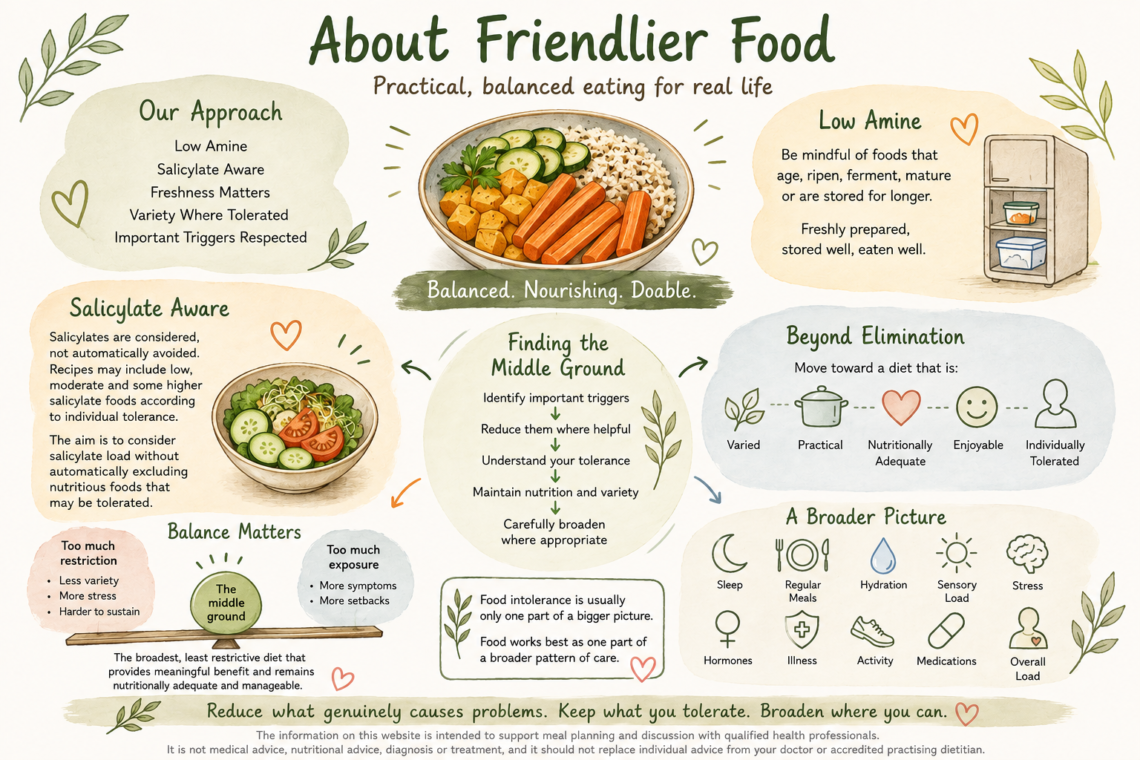
Friendlier Food focuses particularly on Low Amine and Salicylate Aware recipes.
Amines occur naturally in some foods and can increase as foods age, ripen, ferment or are stored. This means freshness, preparation and storage can matter.
Salicylates occur naturally in many fruits, vegetables, herbs and other foods. Salicylate Aware does not mean avoiding them completely. It means considering salicylate content while allowing as much variety as individual tolerance permits.
The aim is not to remove every possible food chemical.
It is to reduce clear and meaningful triggers while keeping the diet as varied, enjoyable and nutritionally adequate as possible.
Food Is Only One Part of the Picture
Food may be an important trigger for some people, but it is usually only one part of a broader pattern.
Symptoms may also be influenced by:
- sleep;
- regular meals and hydration;
- sensory load;
- stress;
- hormones;
- illness;
- physical activity;
- medications; and
- overall physical and emotional load.
This is why Friendlier Food is not about finding a perfectly “safe” diet.
It is about finding a practical middle ground:
Reduce what genuinely causes problems. Keep what you tolerate. Broaden where you can.
The goal is to manage important food triggers without making food more restrictive, complicated or stressful than it needs to be.